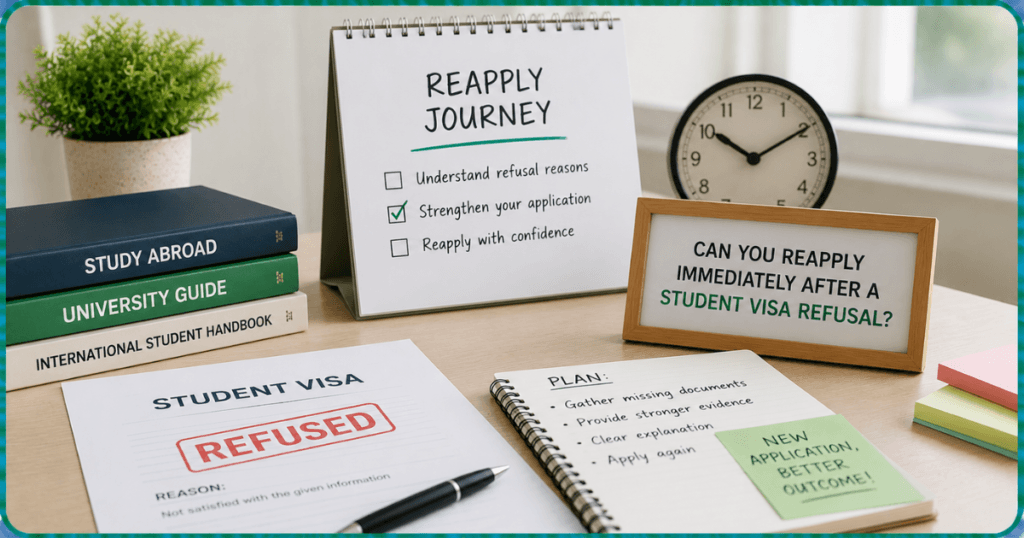
Receiving a student visa refusal is no doubt very disappointing; however, it does not mean your dream of studying abroad is over. While there are no set waiting periods after a visa rejection, prospective students can reapply once they have corrected the errors or addressed the issues that led to the rejection.
If you are a prospective student who wants to study abroad and is currently facing a student visa refusal, come along! In this piece, we will guide you on how to improve your chances of visa approval and common reasons why your application may be rejected.
Common Reasons for Student Visa Refusal
There are various reasons why international students may face visa refusal, and some of these include:
Incomplete Document
If your documents are missing or incomplete, it can result in visa approval delays or outright refusal. The right thing to do is to ensure your documents, both financial, academic and other documents, are complete and accurate.
Insufficient Financial Documents
Most study abroad destinations require international students to submit financial documents to show proof of funds. This will demonstrate that the student can cover their living expenses while studying.
Submitting insufficient or inaccurate financial documents can lead to visa delays or rejection. The right thing to do is to ensure that your financial documents are accurate before submitting your visa application.
Misleading Details
Applicants who submit false, incorrect, or forged documents will have their visas denied outright. In fact, some countries may also place a ban on the applicant, blocking them from coming into the country for a long time.
Doubts On the Students’ Intentions
If immigration officers are in doubt about students’ genuine intentions to study in the country, it may result in an outright visa rejection. The student’s intention to study must be made clear during interviews and other documentation processes.
Read More: Can You Change Universities After Getting a Student Visa?
What to Do When You Get a Student Visa Refusal
Once you get your visa decision and it is a rejection, don’t reapply immediately; instead, focus on following these steps:
- Take time to read your visa refusal letter and note the reasons why your application was rejected.
- Gather your documents again and cross-check them against what the immigration officers may have noted in the refusal letter.
- Outline the immigration rules that you may not have been able to satisfy and review them to see if you can meet them.
- You may appeal the visa refusal if you believe you have met all the requirements and that the decision was unjust. Follow the country-specific immigration rules to appeal your case.
Country-Specific Considerations for Student Visa Refusal
Several countries have their own policies on how to reapply after a visa refusal. Some of them include the following:
United Kingdom
If you receive a UK student visa refusal, you can reapply immediately if you are not placed on a ban or your financial documents are not the issue. There is no waiting period for student visa reapplication. You may reapply to UKVI after correcting the errors in your refusal letter.
One thing you should note is that if you submit fraudulent or false documents, you may be placed on a long-term ban from entering the country. Also, if your financial documents are inaccurate or inconsistent, you may need to take some time before reapplying, as reapplying in a rush could lead to another rejection.
Canada
As in the United Kingdom, there is no strict waiting period enforced by Immigration, Refugees and Citizenship Canada (IRCC) for students who want to reapply for their visas. Instead, students should take time to review the refusal letters to understand the reasons for the rejection.
Also, applicants may request their Global Case Management System (GCMS) records through the Access to Information and Privacy (ATIP) to find out exactly what may have led to the visa rejection.
Prepare your documents again and ensure they are accurate and meet the immigration rules before you reapply for your student visa to avoid another rejection.
Australia
If your visa is refused in Australia, you may be able to reapply immediately, depending on your location. If you are outside the country, you can reapply for a new visa after fixing the errors outlined in the refusal letter.
However, if you are inside the country, you may need to appeal the refusal within 21 to 28 days, as there is a restriction on reapplying directly.
Germany
You can reapply for a German student visa immediately after a refusal, as there is no strict waiting period. However, you should know that the German embassy does not allow students to appeal their visa decision. The appeal process, known as remonstration, was abolished in July 2025 by the German Federal Foreign Office.
Instead, applicants can either reapply immediately or pursue costly legal proceedings in a German court to contest the case.
Read More: Can You Change Your Sponsor After Submitting a Student Visa Application? (2026 Guide)
Tips to Improve the Chances of Your Student Visa Approval
- Prepare additional supporting evidence and documents to back your application.
- Do not submit the same documents without cross-checking for errors or required changes.
- Don’t ignore the refusal reasons. Instead, make use of them to prepare your next application.
- Don’t apply immediately after you receive your student visa refusal decision. Instead, take your time to prepare properly.
- Provide accurate, consistent information and details to support your application.
- Be honest and transparent.
- Ensure that your financial documents are accurate and meet the requirements of the immigration officers.
Frequently Asked Questions
How long after student visa refusal can I reapply?
Generally, most countries do not have a waiting period after visa refusal before reapplying. You can apply immediately after receiving a visa refusal, provided your documents are accurate and comply with the immigration authorities’ rules.
Is it easy to get a visa after refusal?
Yes, you can get a visa even after a prior refusal. What you should do instead is to ensure you have accurate documents to strengthen your application. You should also disclose that you previously refused for transparency and trust.
Can a visa refusal be overturned?
This will depend on the appeal process, which may take up to 10 months. If the error was on the part of the officers, you may get your refusal revoked.
Final Thoughts
Getting a student visa refusal is very discouraging. However, it doesn’t mean the end of your study abroad plans. What you should do is take your time before reapplying. Do not rush the process.
Instead, understand why your application was refused, prepare your documents, and meet other necessary immigration rules to ensure that your application is strengthened.
By providing complete, accurate, and credible information, you can significantly improve your chances of getting an approval for your student visa when you apply again.
A refusal is not a setback but can help you better prepare to achieve your study abroad goals.