
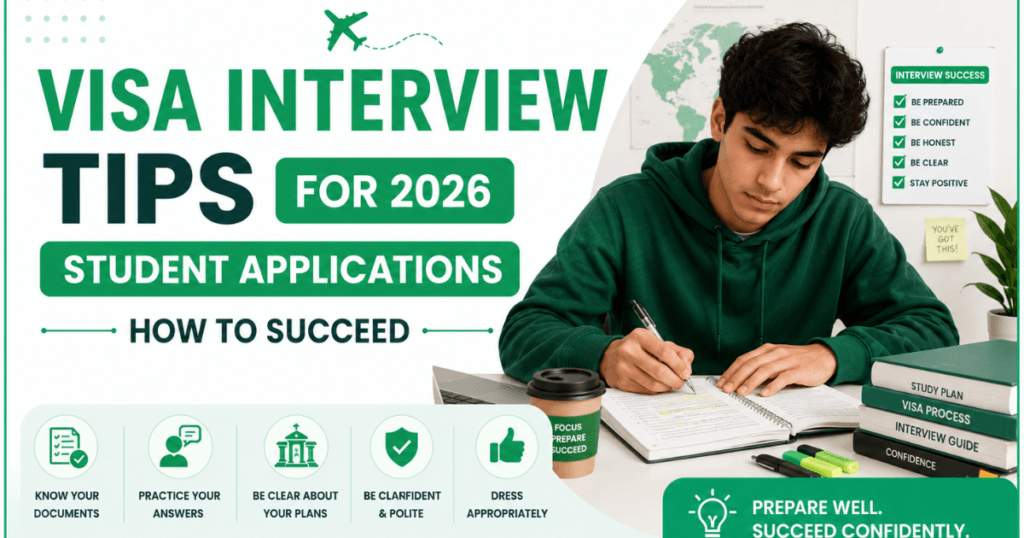
Studying abroad in 2026 is a dream come true for many international students. Receiving that admission letter from an institution in your chosen study destination is an exciting milestone. However, if you want to study abroad as an international student in 2026, it is important that you ace your visa interview.
Passing your visa interview can be seamless when you practice and prepare yourself. What you need to do is to show the immigration officers that you are a genuine student and that you meet all the requirements to study in their country. In 2026, the student visa screening process has become more intense and rigorous for many destinations like the USA, the United Kingdom, Canada, and Australia.
Many of the governments in these countries have now paid very close attention to applications for student visas from international students. They want to know the student’s academic intentions and, most importantly, their financial readiness to study. At the end, they also want to know if the student has plans to return to their own country at the end of their studies. That is why visa refusals have recently skyrocketed.
In this guide, we will be sharing visa interview tips for 2026, the questions you may face, mistakes to avoid, and how to prepare and ace your visa interview with confidence.
What Visa Officials Are Looking For
Many international students make the mistake of memorising generic questions and answers for their visa interview, which is a serious error, as it can lead to a visa refusal. The best visa interview tips for 2026 include practising answers to these questions in your own words, showing visa officials that you truly understand what the task ahead entails. Some of the things visa officials are actually looking for in international students are:
Genuine Student Intentions
The officials want to know the reason why you want to study in their country. They want to assess whether the intention is genuine, the reason for your choosing the particular course, and if your academic plans are realistic in the long term.
Financial Stability
Visa officials want to know whether the student can cover their tuition, living expenses, accommodation, and other expenses while studying in the country. The truth is, the country’s governments do not want a situation in which international students enter the country and have to rely on public support to survive.
Financial concerns have remained a common reason for visa refusals among international students studying abroad. Aside from having sufficient funds to cover your tuition and living expenses, visa officials also want to know whether your source of income is genuine, as they do not want any issues related to fraud or untrustworthiness when it comes to providing proof of finances.
Academic Intent
Visa officials will ask you questions to evaluate your academic intent and preparedness. They will want to ask why you have chosen the particular course of study and the institution. They may also review your academic background and other relevant work experience to fully assess your intentions to study in the country.
Future Plans
Another visa interview tip for 2026 that we will be sharing is that immigration officers want to know about your future plans. Also, they would want to find out how well you understand the country you are coming to study in and if your study goals align with your future plans.
Read Also: Confirmation of Acceptance for Studies (CAS): Everything International Students Must Know
Common Student Visa Interview Questions and Visa Interview Tips for 2026
While the questions may vary by country, immigration officers, and other factors, some general questions you can expect in your student visa interview include the following.
Questions About Your Course
They can ask you questions like,
- What course do you want to study?
- Why have you chosen this course?
- How is this course related to your previous academic achievements?
- What are the course modules?
You should be able to discuss your course in full length and confidently. This will show the immigration officers that you have a genuine interest, and you have truly chosen the course of your own volition.
Your University
Visa officers can ask you questions ranging from
- Why did you choose this university?
- What do you know about this university?
- And what other universities have you applied to?
In essence, visa officials expect you to have done adequate research on the university before applying and before the interview. You should have basic knowledge of the university, such as its location, faculties, academic strength, and ranking.
About Funding
Financial questions will also come up, and they are among the most important aspects of many student interviews. Immigration officers would like to know in-depth details about:
- Who will sponsor your education?
- Your sponsor’s occupation?
- How much is your tuition fee?
- How are you going to cover your living expenses, and other financial questions.
All answers to these questions must match the financial documents you submitted earlier in your application. Any wrong answers or answers that appear untrustworthy in this section can affect the decision on your student visa.
Questions about your future plans. At the end or towards the end of the visa interview, many immigration officers would like to know what your plans are after graduation, how your degree will help your future career, and if you plan to return to your home country. Visa officers expect that you answer these questions thoughtfully and present realistic plans.
Country-Specific Interview Considerations and Visa Interview Tips for 2026
The United States
For the United States, the F-1 visa interview is always focused on the student’s intentions, study plans, financial means, and home-country ties. If you are studying or planning to study in the United States, providing strong answers to these questions and more can contribute to a positive outcome for your student visa.
Canada
Canadian immigration officers focus on questions such as your study plans, financial proof, and the consistency of your statement of purpose. They expect applicants to be well prepared to understand the country, the chosen university, and their course.
Australia
The Australian genuine student requirement emphasises academic goals, the student’s future career plans, and the student’s prior study history. They expect applicants to explain how their choice of course will support and aid their future career opportunities.
Read Also: Student Visa Changes in 2026: What International Students Must Know
United Kingdom
For the UK student visa application, many students may not undergo a formal interview. However, some may be invited for a credibility interview. Some of the questions that the immigration officer may focus on are your finances, your university choice, your future career plans, and your course selection.
What to do After the Visa Interview
After the interview, it is best to remain calm and stay patient while monitoring the official immigration portal for updates. Also, for additional document requests, it is best to respond promptly and avoid panic. Processing time varies by country. Therefore, you should avoid speculating unnecessarily and instead stay calm and focused.
Finally,
A student visa interview is not an intelligence test. The officials do not want to know how knowledgeable you are. Instead, they want to understand your intentions, know your reasons for choosing their country, and, overall, show them that you are a genuine student with a clear educational purpose.
Also, it is important that you provide proof of financial support and clearly outline your future career goals. While it is not necessary to give perfect answers, it is important to communicate clearly and honestly and to present yourself as confident in your answers.
Before your visa interview, research your university and familiarise yourself with your course, modules, and everything you need to know. Put together your financial documents and practice answering questions naturally rather than cramming. With the right preparation, your visa interview can be an easy step toward achieving your study abroad dreams.



Hi,
Great tips for preparing for a student visa interview! Confidence, honesty, and knowing your study plans clearly can make a huge difference in the outcome. I also found https://www.studyinuk.com/ very helpful when researching UK universities and visa guidance for international students.