
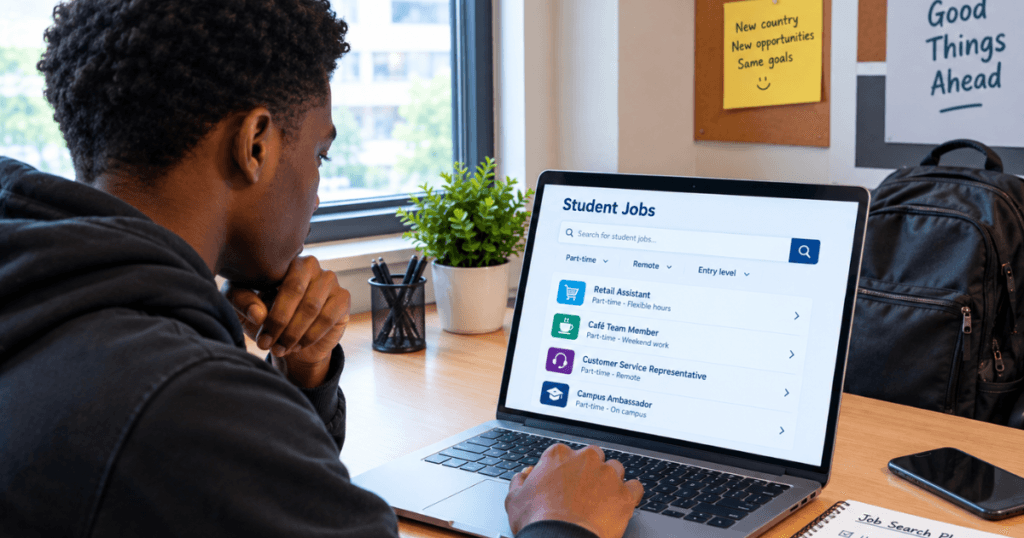
It can be overwhelming to find a student job without local work experience in a new country. You may have had multiple work experiences in your home country but are unsure whether they are transferable to your new country.
Fortunately, there are times when you don’t necessarily need to have experience in that country before you can land a job. Employers will also be interested in your skills, attitude, education, and ability to learn.
As an international student, you may be able to start your job search for a student job without local work experience using what you already know. It is also possible to develop new skills during the course of study.
See what to do here:
1. Know What Employers Expect
Before you search for jobs, read about what employers are looking for. There are multiple part-time jobs that don’t always require years of experience.
Employers may be looking for someone who can:
- Communicate clearly
- Work well with other people
- Arrive on time
- Follow instructions
- Learn quickly
- Use basic computer applications
- Ensure appropriate service to customers
- Use their time well
Consider times when you have applied these skills in the past.
You may have, for instance, participated in a family business, a school project, volunteered at an event, or supported an organisation in your home country. These experiences will demonstrate to an employer that you are a responsible worker.
2. Don’t Be Limited by Earlier Titles
Students often think that only work-related experience counts.
Past experiences can help demonstrate your skills. When creating your student CV, emphasise what you did rather than just job titles when searching for a student job without local work experience.
If you assisted at a university event, you can include this, along with noting that you collaborated with a group, interacted with attendees, and completed tasks on time.
As a student group social media manager, you can showcase your writing, communication, and digital skills.
3. Display Skills Related to Where You Live
Your experience from another country is still valuable when you are looking for a student job without local work experience.
If you were a retail worker, an administrator, a person in the hospitality industry, a teacher, or anything else, talk about the skills you acquired in your job before you left your country.
Don’t make your experience seem less significant just because you gained it in another country. Rather, relate your past experience to the job you are applying for.
4. Prepare a Simple CV
Even if you don’t have local work experience, a strong CV can impress employers.
Maintain readability of the document. Write out your qualifications, education, related work experience and skills, as well as your volunteer work or other activities that demonstrate your capacity to work.
Your CV should also be tailored to each job.
For a job application, specify customer service, communication, and teamwork if applying for a café position. For office-related jobs, emphasise computer skills, organisation, and administration.
Don’t put information that does not relate to the position.
5. Use Student-Friendly Job Platforms
The Internet can help you find a student job without local work experience. It’s easier for your student job search because you can find vacancies before going in person to a business.
Platforms like Handshake, Interstride, LinkedIn, Indeed, Northbridge, and others offer international students the opportunity to browse thousands of job listings from top companies.
Check job sites, the university career site, and local job sites. You can also check with your school’s Career Centre for job opportunities specific to students.
You can search for terms such as:
- Part-time jobs
- Weekend jobs
- Evening jobs
- Campus jobs
- Temporary jobs
- Entry-level jobs
- Student assistant positions
Avoid applying just for positions that are a direct match to past work. It can be helpful to have local experience first to get your foot in the door with employers before they start looking for you.
6. Build Local Connections
Networking may be helpful if you’re seeking jobs as an international student.
Let your classmates, university lecturers, student advisers, and other people you have come into contact with at university know that you are looking for a part-time job.
Attend your university’s campus career events and employment fairs to network and build lasting connections.
You don’t have to single out everyone and ask them for a job. Describing your job type can help others know how they can help you.
Suggested: What Should You Do If an Employer Asks You to Work More Hours Than Your Student Visa Allows?
7. Consider Volunteering First
Students seeking local work experience and who have not yet found a permanent job may find it helpful to volunteer.
Search for and volunteer your time for charities, community groups, university events, and groups in need of volunteers.
Gain insight into the local workplace setting through volunteering. It can also provide you with examples to discuss in your future interviews.
Regular volunteering could lead to the opportunity of adding the activity to your CV.
8. Prepare for Interviews
Securing an interview carries weight, particularly if you have little local experience.
Employers may question your motivation for the position, your abilities, and how you would handle various scenarios.
Practice quick responses in advance for the interview.
If you’ll be asked about your lack of experience in the area, do not apologise. Describe your experience and demonstrate your readiness to learn.
You can state that you don’t have a lot of experience in your area, but you do have some, can transfer your skills, and are willing to learn as you work.
9. Demonstrate That You Are Ready to Learn
Your attitude will go along with your experience in many entry-level part-time positions for students.
Demonstrate an understanding of the job duties. Pay attention to the questions and be truthful in your responses during the interview.
If there is something you don’t know how to do, let them know that you’re interested in learning.
Employers might choose someone who is trustworthy and willing to learn over someone who has experience and doesn’t take the job seriously.
10. Check Your Student Work Rules
As a rule, ensure you are aware of what rules will apply to you in your new country before accepting any employment while studying.
There could be constraints on the working hours for international students or on the types of jobs they are allowed to accept.
Check official advice from the government websites and university student centres before you start work. Do not just listen to friends or social media.
Knowing the rules can help you avoid trouble with your student visa and immigration status.
Final Note: Keep Applying and Improving
Getting a student job without local work experience while studying abroad may be overwhelming. However, it is not an impossible feat.
You may have to take your first job with less-than-ideal experience, and it may be days or months before you find the right one. Do not draw conclusions that you are not cut out for the job until you are turned down.
Review your CV after unfruitful job applications. Study the job requirements in job advertisements and include the skills relevant to the job description.
Or you could start by looking for less competitive, more straightforward jobs. Local experience is especially useful in these cases, as even a few months under your belt can make applying for more desirable jobs next time a whole lot easier.
The bottom line is to use your existing skills and experience and be obvious about it, look for entry level jobs you think will give you the opportunities to learn, know where you are going is the key.
Your first student job doesn’t have to be your ideal job. It can be the stepping stone to boosting your confidence, earning some cash and acquiring valuable skills in your new surroundings.