You have done the calculations. Your rent is covered, your monthly food budget looks reasonable, transport is sorted, and you’ve even set aside a little money for emergencies.
So you arrive in your new country thinking, “Okay, I should be fine.” Then the first month happens. Suddenly you are buying items you never planned to buy.
From bedding to kitchen items, getting a SIM card, transport from the airport, groceries for the first few days, a winter jacket, school supplies, deposits and maybe a few unexpected fees. Before you know it, the amount you spent is above your normal monthly budget.
This does not necessarily mean you planned badly. Your first month abroad costs are simply different from the months that follow. You are not only paying for your normal living expenses; you are also paying the costs of setting up your new life.
Here is what international students should expect and how to prepare for the costs of their first month abroad.
Why Is the First Month Abroad Usually More Expensive
Your first month abroad is usually more expensive because you are building a new life away from what you are comfortable with. Find out more reasons below:
Your First Month is a Setup Month
One of the biggest mistakes students make is treating the first month like an ordinary month. It is not.
Think about it. Once you are settled, you may only need to pay rent, groceries, transport and your regular bills. During your first few weeks, however, you may need to buy or pay for several items at once.
You may need to bring a duvet and bedsheets, as your accommodation does not provide them. You might need plates, a pot, a kettle or basic cleaning supplies.
You may need to pay for a local SIM card or internet. You could also have registration costs, transport expenses or other one-off payments.
These are not necessarily expenses you will repeat every month, but they can make your first month much more expensive.
The Cost of Accommodation Can Be More Than Just Rent
The costs of accommodation abroad can surprise you. When people think about the cost of studying in another country, they usually focus on the rent they have to pay each month.
Depending on where they live and the type of place they stay in, moving into a new home may require more than a single payment.
For example, you may have to pay a security deposit, advance rent, application fees or other charges. Even if costs are refundable or one-off, the money still needs to be ready at the beginning.
So if your monthly accommodation budget is £400, or any other amount, do not assume you will need exactly that amount when you arrive. Instead, prepare to bring some extra cash, as it will come in handy for managing your first month’s costs abroad.
Suggested: What Nobody Tells You About Your First 30 Days as an International Student
Check What You Are Expected to Pay Before Moving
Before travelling, ask your accommodation provider questions like:
- What do I need to pay on arrival?
- What is refundable?
- Are utilities included?
- Is there an additional deposit?
Checking all of these details can save you from feeling overwhelmed with your first month abroad costs. It will also ensure that you are prepared to handle any unforeseen financial circumstances.
You Are Stocking a Home, Not Just Buying Food
Your first grocery shop may be bigger than expected. Your first grocery trip can also catch you off guard. During a normal month, you may buy food as you run out.
However, when you first arrive, you may be starting from scratch. You may need cooking oil, salt, spices, cereal, rice, pasta, toiletries, detergent, tissue, and other basics.
Even if each item looks cheap, buying many items at once can quickly drive up the total on the bill.
A helpful tip in managing your first month abroad costs is not to try to buy everything in one day. Focus on what you really need first, then pick up the rest later. You can also. See if the place you are staying already has items like pots and pans or cleaning products before you decide to buy them.
Do Not Forget the Journey Between Places
Transport costs can start immediately. You should plan for your bus or train expenses, but don’t forget the transportation costs that come with moving to a new place.
Getting to the airport or train station, going to your university for enrollment, visiting the bank, buying items and going to meetings can all cost more than you expect.
If you don’t know the transport system well, you might end up paying more than needed while trying to find affordable ways to get around.
Before you go somewhere new, take a moment to learn how the public transportation system works iy. Look into whether there is a student deal, a travel card you can use, or a pass that covers your trips for a whole week or a month. These options might help you save money on your first month’s costs abroad.
Packing Light is Good, But Be Realistic
When travelling abroad, you may need things you did not pack. There’s a difference between packing light and showing up without the things that really matter.
If you are learning in a place, you might suddenly realise that your clothes don’t match the weather. A student who moves from a warm country to a cold one will often find that a warm coat, sturdy shoes, gloves, and other winter clothes are important. Buying all of these after arrival can be expensive.
The same applies to academic or personal items. Maybe you need a laptop accessory, stationery, an adapter, a water bottle or something specific for your accommodation.
Before you travel, check the weather, look into accommodation options, and review the university’s requirements. Make a list of things that’re cheaper to bring from home and things that are better to buy after you arrive.
Not Every Expense is a Monthly Bill
There may be one-off university and administrative costs. Your first month abroad costs can involve several administrative tasks. From university registration, student identification, opening a bank account, transport registration, health insurance registration where applicable and other arrangements connected to settling in.
Some of these may be free, while others may involve fees. The important thing is to know which ones apply to you before you arrive, rather than being surprised when you need to make a payment.
Build Two Budgets, Not One
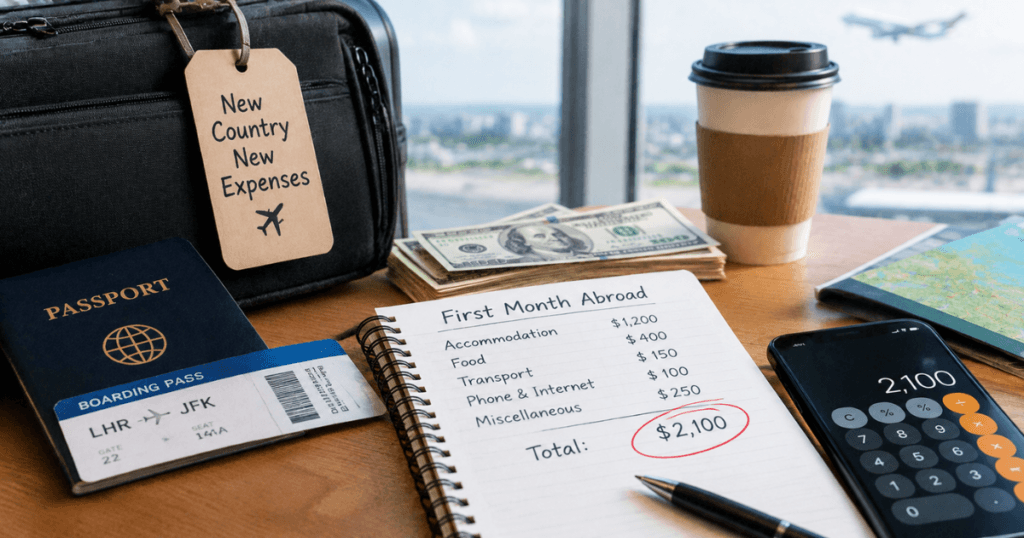
Your budget should have a ‘first month’ section. Instead of creating only a monthly budget, create a separate budget for the first month. Your regular monthly budget might include rent, food, transport, phone and personal expenses. Your first-month budget should include those regular expenses plus one-off setup costs.
For example, you could have categories such as:
- Accommodation: rent + deposit/advance payment if applicable
- Transport: airport/station transfer + local transport
- Food: first grocery shop + normal food budget
- Household: bedding, kitchen items and cleaning supplies
- Communication: SIM card or phone-related costs
- Clothing: weather-appropriate essentials if needed
- Study: books, stationery or other academic items
- Emergency money: money you do not plan to touch unless necessary
The exact amounts will depend on your destination and personal situation. The point is to separate one-off arrival expenses from the costs you expect every month. The first few days can feel exciting.
Suggested: How to Tell If a Student Accommodation Listing is a Scam
Do Not Spend Just Because You Have Money
There is also the emotional side of arriving somewhere new. Everything is exciting. You may want to explore the city, eat out, buy new clothes, decorate your room and try every food you see.
There is nothing wrong with enjoying your first weeks. Just remember that your bank balance has to survive after the excitement wears off. Give yourself a small amount for exploring and entertainment, but do not treat your entire available balance as spending money. You still have several weeks to get through.
Keep an Emergency Buffer
If your budget works perfectly only when nothing goes wrong, it is probably too tight.
A delayed payment,an unexpected transport expense, a replacement item, or an urgent purchase can happen. Having a small emergency buffer means one unexpected bill does not immediately become a crisis.
If possible, arrive with money that is separate from your normal spending budget. You may never need to use it, but knowing it is there can give you some breathing room.
A Little Research Can Save You Money
Ask before you arrive. One of the easiest ways to reduce first-month surprises is to ask questions before travelling.
Speak to your university, accommodation provider and students who already live in your destination. Ask about deposits, transport, grocery shopping, student discounts, household essentials and things students commonly forget.
You do not need to copy another student’s budget exactly. Someone living in accommodation might face very different expenses compared to someone staying in university housing.
A person who cooks meals every day will also end up spending less than someone who eats out often. What matters is getting enough information to make a realistic plan.
Frequently Asked Questions
Is studying abroad more expensive?
Studying abroad may be expensive depending on your destination, course of study, tuition fees, and lifestyle choices.
How much are one month’s living expenses in Canada?
Living and studying in Canada depend on where you are staying.
How much should your monthly expenses be?
Your monthly expenses should be budgeted based on your lifestyle choices and daily needs. Use the scale of preference to prioritise your needs over your wants.
In Conclusion,
If your first month abroad costs more than your usual monthly budget, do not immediately conclude that you have failed at budgeting. You are paying for the process of getting settled, not just for another 30 days of normal living.
The goal is to expect the difference. First, separate your one-off arrival costs from your monthly expenses. Then ask questions before you travel. After that, keep an emergency buffer for events. Finally, do not spend your balance just because you have it; it is a limited resource.