
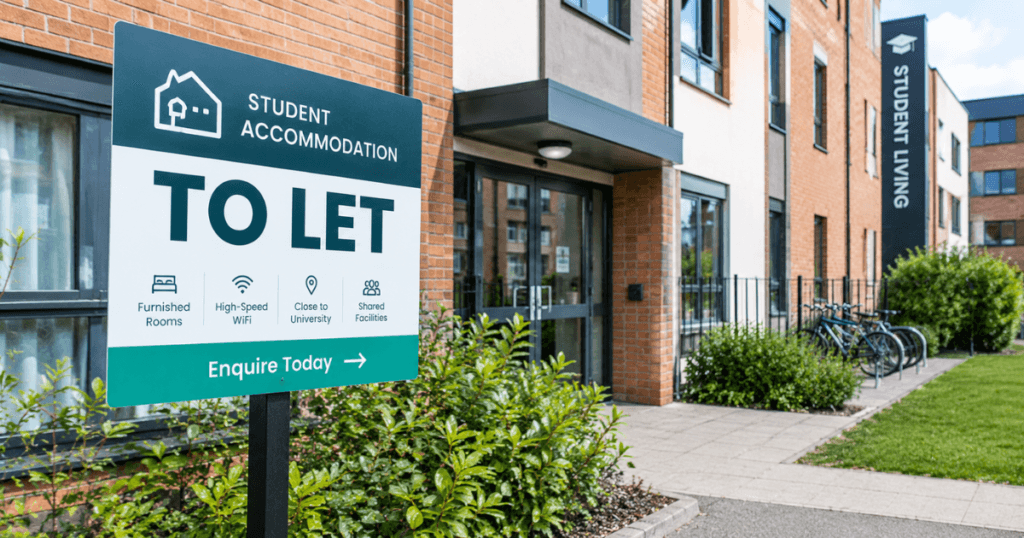
Finding your student accommodation can feel like one of the biggest wins before you move abroad. You find a room that looks beautiful in the pictures. It is close to your university. There is a supermarket nearby, the kitchen looks decent, and the rent seems to fit your budget.
Then comes the message: “Please sign the student accommodation contract to secure your room.” Because you are excited and probably worried that someone else will take the room, you may be tempted to sign immediately. Don’t.
That contract is more than paperwork standing between you and your new room. It is an agreement that can determine how much you pay, how long you must stay, what happens if you want to leave early, whether bills are included, and what responsibilities you have as a tenant.
So, before you sign, take a moment to check these things.
Check Exactly How Much You Will Pay
Start with the obvious one: the rent.
But don’t stop at the number advertised on the accommodation website.
Check:
- How much is the rent?
- Is it paid monthly, weekly or by term?
- When is the first payment due?
- Is a deposit required?
- Is there a holding deposit?
- Are bills included?
- Are there additional administration or service charges?
- Are there charges for replacing keys or other items?
Find Out What is Included in the Rent
“Bills included” can be one of the most attractive phrases you see when looking for student accommodation.
But what exactly does it mean?
Ask.
Does it include:
- Electricity?
- Gas?
- Water?
- Heating?
- Wi-Fi?
- Laundry?
- Cleaning?
- Council tax, where applicable?
Don’t assume that everything is included just because the listing says “bills included”.
Your contract should clearly state what is included. If there are any limits or conditions. This is important because two rooms, with the rent, can end up having very different monthly costs.
Student A pays £750. Gets electricity, heating, water and internet all included. Student B pays £700 but must pay separately for electricity, heating, and internet.
The £50 cheaper room may not actually be cheaper.
If you’re staying in university accommodation, Citizens Advice also recommends checking the written terms to see how much rent you pay, when it is due and what is included.
Read Also: How to Tell a Student Accommodation Listing is a Scam
Look at the Start and End Dates
This is one of those boring details that becomes very important later. Check the exact start date, end date, and length of the contract. You don’t want your accommodation contract to start weeks before you arrive unless you understand why you are paying for that period.
Check when the contract expires. For example, your university course may finish in June. Your accommodation contract may run until August. That could mean you will pay for a room you no longer use. Also, check whether the accommodation provider wants you to leave by a specific date and time.
Student accommodation contracts can be fixed-term agreements, and the rules about leaving early depend on the type of accommodation and agreement you have.
Look for a Break Clause
This is a section of a student accommodation contract you really should not skip. A break clause might let you end the agreement before the fixed end date, provided the conditions set out in the contract are met.
Why does this matter?
Let’s say you arrive in September, and by November you realise your accommodation isn’t working for you. Maybe you have changed universities, maybe your course has changed, maybe you have to return home unexpectedly. If your contract does not allow you to leave early, you may still owe money even after you have moved out.
Students with fixed-term agreements may still be responsible for rent until the fixed term ends unless the agreement permits an exit or the landlord agrees to terminate the contract. So, don’t just search the contract for the words “break clause.”
Read the actual conditions.
Ask: “If I need to leave early, what exactly do I have to do?”
Understand the Deposit Before Handing Over Your Money
A deposit can feel like just another payment you have to make before getting your keys.
But it is important to understand what happens to it.
Check:
- How much is the deposit?
- Where is it held?
- What can the landlord deduct from it?
- When should it be returned?
- What happens if you disagree with a deduction?
Also, find out whether the payment you are making is a holding deposit or a tenancy/security deposit. They are not necessarily the same thing.
If you’re renting privately in England, there are rules around tenancy deposits and approved protection schemes. GOV.UK explains the deposit protection requirements, while Citizens Advice provides guidance on deposits and renting costs.
Take photos and videos of scratches, stains, broken drawers, damaged walls, marks on the carpet, basically anything that was already damaged when you arrived. You don’t need to turn into a professional photographer. Just make sure there is a clear record of the room’s condition.
An inventory or check-in report can also help you prove what condition the accommodation was in when you moved in. That five-minute photo session could save you a very stressful conversation about your deposit months later.
Check the Rules About Your Room and Shared Spaces
A student accommodation contract comes with rules, and some of them may affect your everyday life.
Before signing, look for rules about:
- Overnight guests
- Noise
- Parties
- Smoking
- Pets
- Cooking
- Cleaning
- Shared kitchens
- Decorations
- Candles
- Parking
- Subletting
You may think, “Why would I care about this? I’m just renting a room.”
You will care when your friend wants to stay for two weeks, and the contract says guests cannot stay beyond a certain period, or when you want to put something on your bedroom wall and discover that you’re not allowed to make certain changes.
If you are sharing a house or living space, make sure to review the paper you are signing. Is it an agreement that’s just for you, or is it for everyone together? That is a major difference.
With a joint tenancy, responsibilities can sometimes extend beyond just your own bedroom. The exact legal position depends on the type of agreement and country, so don’t assume that “my room = only my responsibility.”
Know Who You Are Actually Signing With
Before transferring money, make sure you know who the landlord, university or accommodation provider is. If you’re dealing with an agent, check the agency’s details too.
This is particularly important when you are searching from another country and communicating entirely online. A listing can look convincing because it has beautiful photographs and a professional-looking website. That doesn’t automatically mean the person contacting you is legitimate.
Ask for:
- The full name of the landlord or accommodation provider
- Their contact details
- The full property address
- The actual contract
- Details of where and how payments should be made
- Information about who manages the property
If something feels rushed or strange, pause.
Being told “Pay today, or someone else will take the room” is not a good reason to ignore your questions.
Read Also: What Nobody Tells You About Your First 30 Days as an International Student
Know Who is Responsible for Repairs
Imagine you move into your new room, and two weeks later, the shower stops working.
Who do you contact?
Don’t wait until something goes wrong before finding this information. Save the contact details on your phone when you move in.
Find out whether there is:
- An online maintenance portal
- An emergency phone number
- A landlord or property manager
- A university accommodation team
Read Through the Guarantor Requirements
This is particularly important for international students.
Some landlords may ask for a guarantor, a person who agrees to cover financial obligations if you fail to meet the landlord’s obligations. For a student who has just arrived in a new country, finding a local guarantor can be difficult and feel overwhelming.
So, before you fall in love with a particular room, ask: “Do international students need a guarantor for this accommodation?”
If the answer is yes, ask what alternatives are available.
Some accommodation providers may accept other arrangements, but this varies. And if someone is agreeing to be your guarantor, make sure they understand exactly what they are agreeing to. A guarantor’s responsibilities can be significant.
Frequently Asked Questions
What are the requirements for student accommodation?
Proof of identity, an official academic letter, proof of funds, and a signed lease agreement are among the documents required for student accommodation.
What to check in a rental agreement?
Check the start and end dates of the rental agreement, rent details, bills to pay, deposits, and any other details that pertain to your lease agreement.
How long can you stay in student accommodation?
You can stay in student accommodation for the duration of your rental period. Check the rental agreement to know the start and end dates of your contract.
Final Thoughts
Finding accommodation abroad is exciting, especially after weeks of searching through listings and imagining what your new life will look like. But don’t let the excitement make you skip the boring part. That student accommodation contract could be one of the most important documents you sign during your move abroad. Take your time, read it, ask questions and save a copy.