
Can a Student Job Help You Get a Graduate Job Abroad?
If you are studying in another country, having a student job might seem like something you do mostly to make some cash. That part-time job could also help you get a job after you finish university. The short answer is yes; it can help.
A part-time job while you’re a student doesn’t always mean you’ll get a job after you graduate. It doesn’t mean an employer will help you with your visa. The experience you get while you’re in school can strengthen your resume, help you build contacts in your field, and give you something real to talk about in an interview.
So, if you’re an international student wondering, “Should I even try to get a student job if it is not connected to my major?” here are a few things to think about.
Your Student Job Gives You Experience to Put on Your CV
One of the hardest things about applying for your first graduate job is being told that you need experience when you have only just graduated. A student job can help you avoid having an empty CV.
For example, imagine you are studying Business and working part-time as a customer service assistant. The job may not have “Business” in the title, but you could still develop useful skills. These skills may include communication, teamwork, problem-solving, handling customers, and working under pressure. Employers look for these skills in graduates across different industries.
The important thing is not just having the job. You should be able to explain what you actually learned from it.
Instead of writing:
“Worked in a restaurant.”
You could highlight things such as:
“Handled customer enquiries, processed orders and worked as part of a busy team while maintaining good customer service.”
That sounds much more useful to an employer because it shows what you can actually do.
A Student Job Can Help You Understand How Workplaces Operate
For international students, studying abroad is often their first experience living and working in another country.
A Student job helps you learn how people talk at work, how meetings are run, how managers give feedback, how to work with colleagues from different backgrounds and what employers want from their staff.
Getting a student job gives you experience that makes the transition from student life to work life easier. Honestly, even learning something simple, such as how to write a professional email or speak confidently to your manager, can become useful when you start applying for graduate positions.
Read Also: What is the Difference Between a Graduate Visa and a Work Visa
Can a Student Job Lead to an Internship or Graduate Opportunity?
Sometimes, your student job can become your first step towards another opportunity.
You may meet a manager who knows about an internship opening. A colleague may recommend you for another position. Your employer may also have graduate or full-time vacancies that you can apply for after you finish your studies.
That is why your student job is worth taking, even if you think it is only temporary. Be reliable. Do your work well. Build relationships with your colleagues. If you want to stay in this industry, let your manager know at the time.
Your employer will notice that you are serious about your student job. You do not need to constantly ask for a graduate job. Simply showing that you are hardworking and interested can help people remember you when an opportunity becomes available.
What If Your Student Job Has Nothing to Do With Your Degree?
This is something many students worry about.
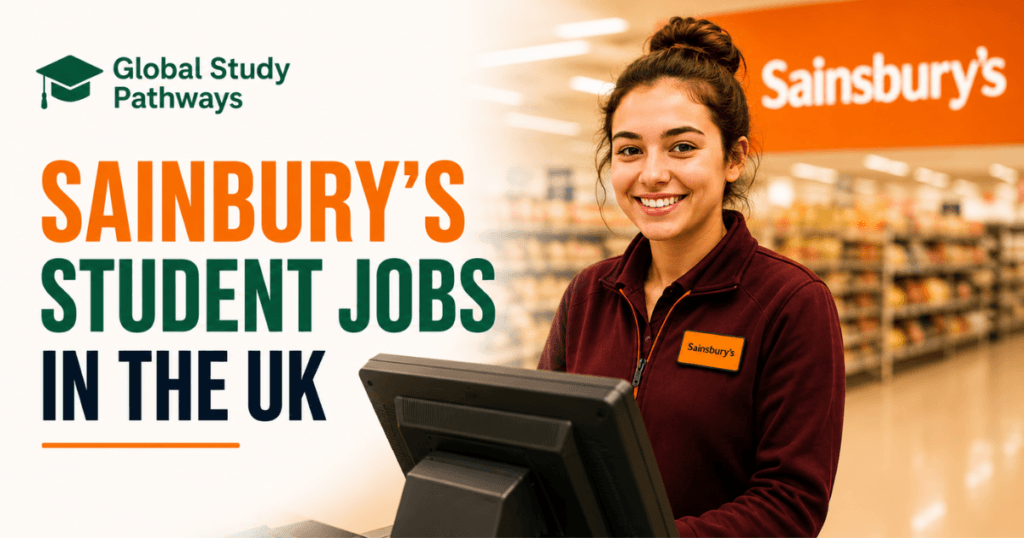
You may be studying computer science but working in a supermarket. Or you may be studying business while working in hospitality. That does not mean the experience has no value.
The key thing is to find the skills that can move with you to your job. For example, working in customer service might show that you can speak clearly and handle moments.
A job in administration as a student might show that you are organised, careful, and good at meeting deadlines.
You should also look for chances to take on duties that are closer to your career goals. If you work in a shop, for example, you might offer to help with stock management, records or social media if those chances come up.
Doing these things can help you gain experience and get noticed in areas that matter to your future.
Your student job does not have to perfectly match your degree. What matters is how you use the experience.
But there is one important thing international students should remember.
A student job can strengthen your CV, even though a student job does not automatically give you the right to remain in the country after graduation.
Your immigration status matters. For example, in the United Kingdom, students from eligible countries can apply for the UK Graduate visa after completing an eligible course. The Graduate visa currently allows eligible graduates to work or seek work after their studies.
The duration of the Graduate visa will change from 2 years to 18 months for applications made on or after 1 January 2027. However, graduates with a doctorate can get 3 years.
Similarly, Canada has the Post-Graduation Work Permit (PGWP), which allows graduates to gain work experience after finishing their studies. Canada says eligibility depends on the institution and programme, so students must check the requirements instead of assuming every course qualifies.
Australia also offers a Temporary Graduate visa pathway that allows eligible graduates to live and work for a period after finishing their studies. This Temporary Graduate visa pathway can help Temporary Graduate visa holders stay in the country for a while.
So, before accepting a job or making plans to stay after graduation, check the immigration rules in your country. Don’t choose a student job only because it looks impressive.
Finding the “perfect” student job can feel very stressful. In reality, you must balance studies, finances and work. If you find a part-time student job that pays you, gives you experience and lets you study enough, that part-time student job can already be valuable.
Do I Need to Stay in the Same Student Job Throughout My University Studies?
You also do not have to stay in the same job throughout university.
You might start with a part-time job in your first year to gain hands-on experience, then seek internships or roles more closely aligned with your future career in your second or third year.
The idea is to keep making progress. So, can a student job lead to a job in another country after graduation? It can definitely be useful. It is not a sure thing.
The real advantage is the combination of education, work experience, skills, and professional connections. If you are studying abroad and you can manage a student job without hurting your grades, consider it an opportunity to build more than your bank balance.
Frequently Asked Questions
Which graduate jobs are in high demand abroad?
Jobs in healthcare, technology, engineering, and skilled labour are in high demand in many countries abroad.
What skills are important for getting jobs abroad?
Rather than relying on degrees alone, you can focus on improving your soft skills, getting hands-on experience and gaining global knowledge to stay competitive in the job market.
What career allows you to work internationally?
Engineering, Information technology, teaching, healthcare, and technical skills are some of the careers that can increase your chances of working internationally.
Can I apply for jobs abroad without experience?
Yes, you can apply for jobs abroad without experience. However, you may only be able to get entry-level jobs and jobs that do not require hands-on experience.
Final Thoughts
Learn skills, meet people, add your achievements to your CV, ask questions and look for internships. Pay attention to opportunities at your university and in your workplace. By the time you graduate, you want your CV to show more than “I have a degree”. You want it to show: “I have a degree, I have worked, I have developed useful skills, and I already understand what it means to work in this environment”. That can make a much stronger impression when you start applying for graduate jobs.