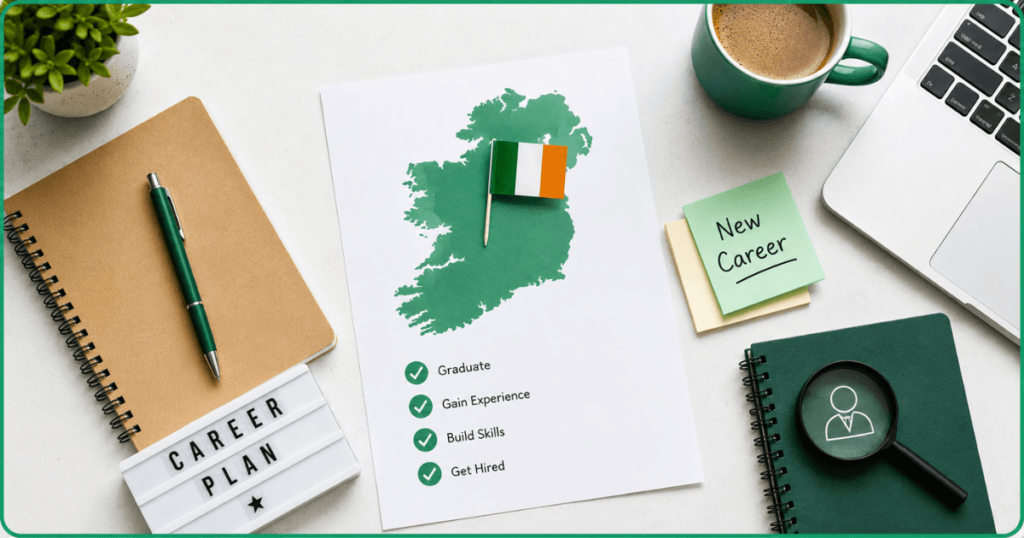
Ireland is one of the most attractive study-abroad destinations for international students worldwide. This is because it boasts a world-class educational system and creates clear career opportunities for the graduates.
You can enjoy life after graduation in Ireland, as it is seen as the best option for many international graduates, since the country is home to major global companies like Microsoft, Apple, Intel, Google, and so on.
All of these offer graduates access to a clear professional goal. To work in Ireland as an international graduate, the first step is to complete your education, after which you can secure employment, gain valuable work experience, and build your career over time.
In this guide, we will explain how to get a job in Ireland after graduation, including how to search for post-study work options, obtain an employment permit, and everything you need to succeed.
Understanding Ireland’s Employment Permit System for International Graduates
Many international graduates seeking to get a job in Ireland after graduation need to obtain an employment permit to stay and work full-time in the country. This is made possible through the Third Level Graduate Programme.
Here is how the process works:
Use the Third-Level Graduate Programme
Upon completing your degree in Ireland, you can stay and work immediately without needing an employment permit. Here, graduates will need to transition from a student visa to a graduate visa (Stamp 1G).
This allows them to stay for a short time, depending on their degrees and program levels, until they get employment to sponsor their visa for a long time.
For the bachelor’s degree, which is at Level 8, graduates can stay for up to 12 months after graduation. Master’s or PhD degrees, known as Level 9 or Level 10, are allowed to stay for up to 24 months after completing their degree.
Secure a Job Offer
After graduation, choose the keywords where you can stay for a short time. You can begin searching for jobs that would sponsor a visa to allow you to stay for a long time. Upon securing a job, you will need to apply for an employment permit. Before applying for an employment permit, you have to understand that the employer must be legally registered to operate in Ireland and willing to cover and sponsor a visa.
Suggested: Working While Studying in Ireland: Rules, Hours & Jobs (2026)
Determine Your Employment Permit
There are two distinct types of employment permits for graduates in Ireland. These are
Critical Skills Employment Permit CSEP
This employment permit is designed for occupations such as cybersecurity, healthcare, engineering, finance, software development, and other skills in shortage.
In this critical skills employment permit, it allows international graduates to reside in the country for a long time. It provides clear paths to family reunification.
And they can apply for a residence permit stamp after a stipulated qualifying period. The CSEP processing time takes between 3 to 4 weeks. Also, the salary range for applicants in this scheme is set between €40,904 to €68,911.
General Employment Permit GEP
For jobs that are not classified under the critical skills, you will need to obtain an employment permit, a general employment permit. This will cover those in other job sectors who are permitted to work legally in Ireland. The processing time for the GEP can take 6 to 9 weeks, and applicants must have a salary range of €36,605.
Proceed to Apply for the Employment Permit
Once you secure your job and determine the type of employment permit you need, you can apply for it. You can submit the employment permit application as an employee or ask your employer to do so on your behalf.
Also, authorised agents can keep that on your behalf. Documents you will likely need for your employment permit application include your passport, your job offer details, a letter from your employer, your employment contract, your academic qualifications, and your salary.
Receive Your Employment Permit
After submitting your application to the Department of Enterprise, Trade and Employment (DETE), it can take between 3 to 6 weeks before you get a response.
Once you receive the response, you can transition from a graduate visa to an employment permit, which allows you to work legally in Ireland for the long term.
How to Get a Job in Ireland After Graduation
Here are some ways to find a job in Ireland and succeed in your job search.
Build a Strong Irish-Style CV
Your CV, which is the first impression that an employer has of you, should be effective. Prepare an effective CV that is concise and professional and clearly highlights your relevant skills and achievements.
Create a Professional LinkedIn Profile
Many recruiters use LinkedIn when searching for talent. Create a professional LinkedIn profile, use professional profile photos, connect with industry experts and professionals, and outline your skills, projects, and achievements to get noticed by recruiters.
Use Irish Job Search Platforms
Popular platforms like GradIreland, Irishjobs.ie, Indeed Ireland, jobs. i.e., provide jobs and networking opportunities for graduates across multiple sectors. Setting up job alerts on these websites will allow you to receive job notifications in real time so you can apply immediately.
Suggested: Ireland Student Visa Guide 2026: Requirements, Fees & Application Process
Make Use of University Career Services
Many university career centres offer services to support students, such as CV reviews, interview preparation, networking events, and other graduate recruitment fairs. These services can connect you directly with potential employers.
Gain Work Experience Before Graduation
You can gain work experience through internships, part-time jobs, or volunteer work. Employers prefer applicants who already have some experience in the job they are applying for. This will strengthen your employability and make you job-ready.
Develop In-Demand Skills
Sharpen your skills, especially those in demand, including your technical skills, business skills, and soft skills like communication, leadership, problem-solving, teamwork, adaptability, and so on. With continuous learning, you can remain competitive in the job market.
Networking
This is one of the most effective strategies in your job search. Expand your professional network by joining associations, connecting with alumni, engaging on LinkedIn, and attending conferences and employer workshops. Building these professional relationships will help you to uncover job opportunities even before they are advertised to the public.
In Conclusion,
Getting a job in Ireland after graduation is achievable, provided you follow the right strategies and take advantage of the available opportunities. Ireland is a country known for its strong economy and for hosting some of the world’s largest industries and companies.
Planning early and developing your skills will help you to land the right job that suits your skills and is in high demand in the country. All of which will prepare you to build the right foundation for a successful international career as an international student.